The world needs fertiliser – without it, 4 billion people would starve
Nitrogen fertiliser is essential for societal growth. The introduction of the Haber-Bosch process in 1913, a method of extracting atmospheric nitrogen to create ammonia, allowed for the mass production of nitrogen fertiliser and is regarded as one of the most important inventions of the 20th century. Without fertiliser, we would not be able to produce the sufficient crops and nutrients we need to feed the growing global population and ensure food security.
The Environmental Cost
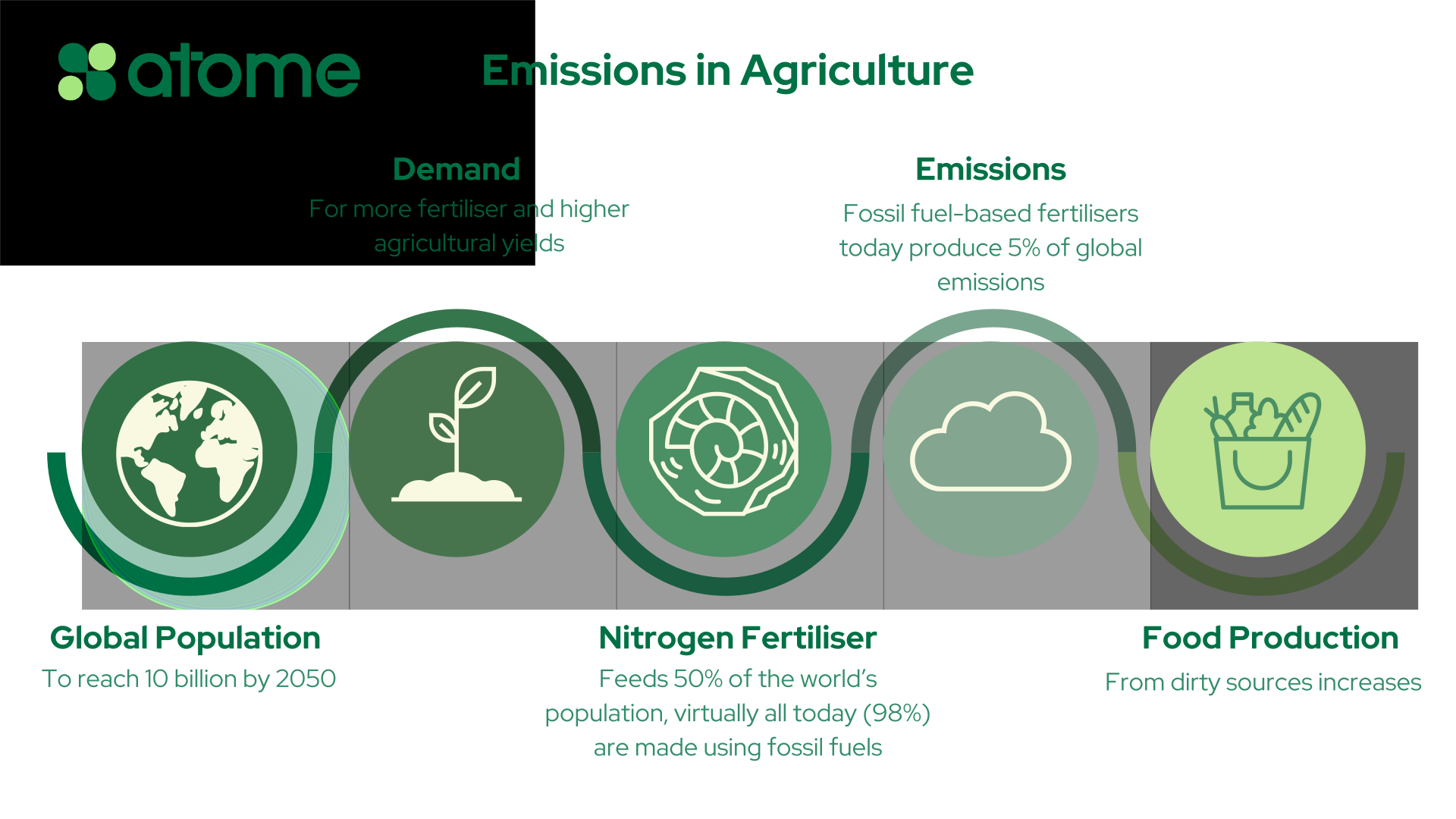
Production and use of fertilisers alone contributes to 2.6 billion tonnes per year of harmful emissions. That’s more than the combined annual emissions of the global shipping and aviation sectors.
Agriculture as a sector is responsible for nearly one-quarter of global greenhouse gas emissions.
The Movement
The world’s largest food manufacturers and food consumer groups are facing increased pressures from policymakers, investors, and consumers to provide affordable low-carbon products on our supermarket shelves.
As a result, leaders in food and agriculture are actively seeking to mitigate their supply chain emissions, most significant and challenging of all being the production and application of fertiliser for crop production.
Whether it’s bananas, potatoes or tea, conventional fossil-fuel-based fertiliser contributes significantly to a product’s carbon footprint. In some cases, fertilisers can represent more than 50% of a farmer’s emissions.
Our Solution
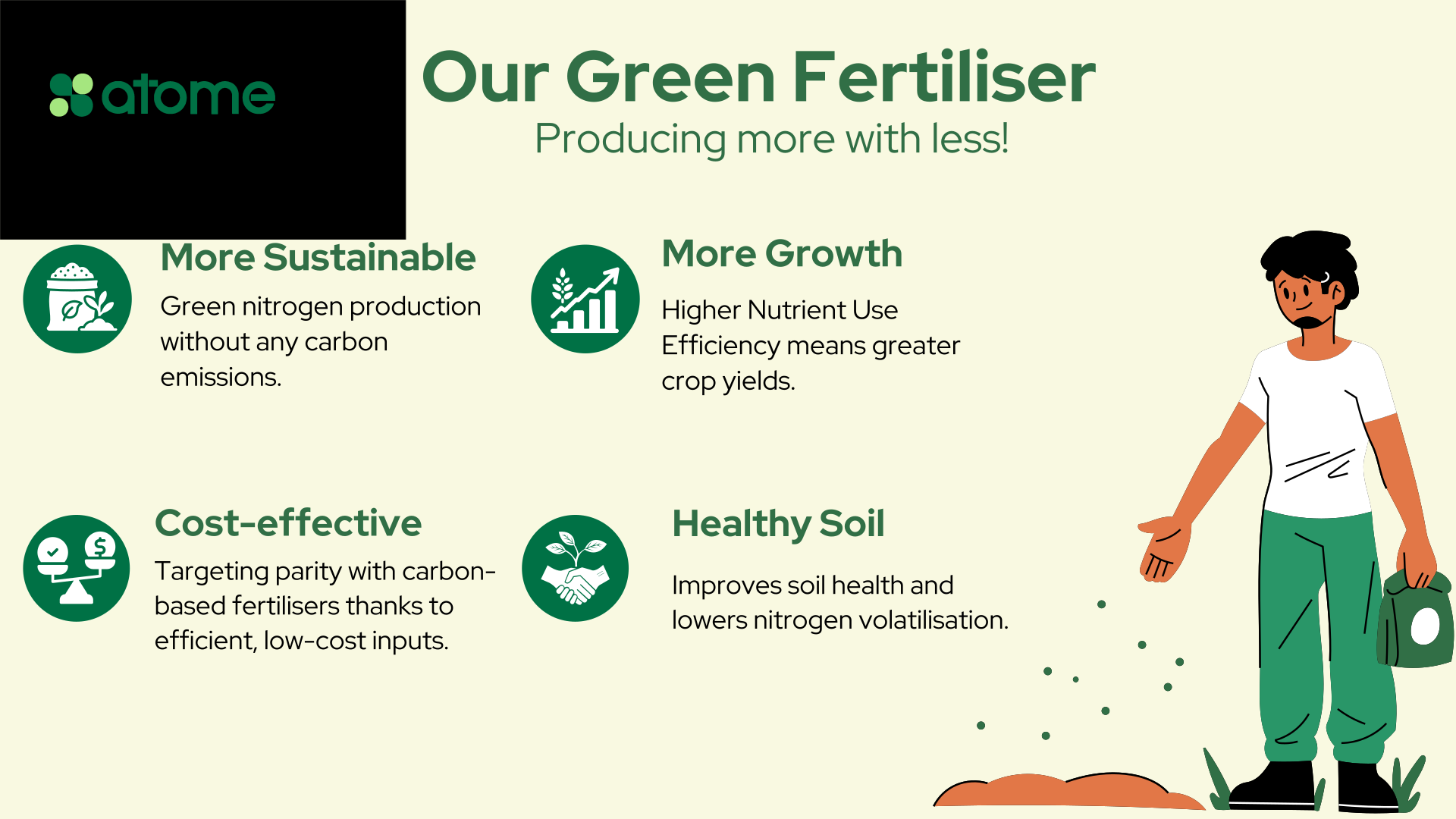
Whilst the transition to lower carbon food systems can incorporate levers, one of the most effective is to substitute the use of fossil fuels in the production of ammonia, one of the key ingredients in fertilisers.
Therefore, our green Calcium Ammonium Nitrate (CAN) fertiliser uses ammonia produced at industrial scale made only from renewable power and water. Our process virtually eliminates harmful emissions at the point of production which leads to the displacement of up to 12.5 million tonnes of CO2 – from just one of our projects!
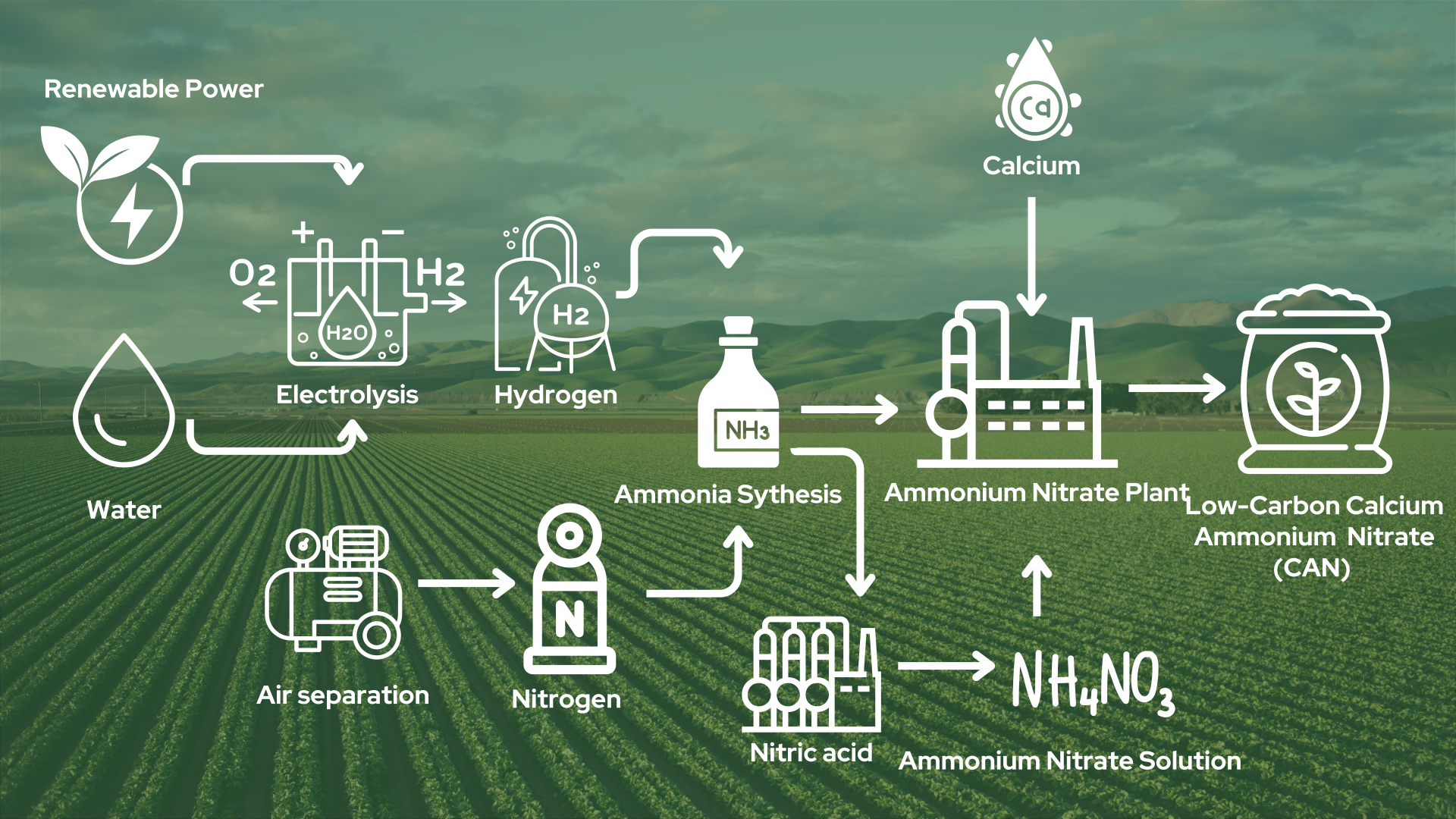
- 100% renewable electricity from the Itaipu dam powers the process
- Electrolysis splits water (H₂O) from the Paraguay River into hydrogen (H₂) and oxygen (O₂)
- Green hydrogen (H₂) is stored for later use; oxygen (O₂) is safely released
- Cryogenic air separation cools air until it liquefies
- Nitrogen (N₂) boils off first at −196°C and is collected
- High-purity nitrogen (N₂) is stored for ammonia synthesis
- Green hydrogen (H₂) and nitrogen (N₂) are combined via the Haber-Bosch process
- Reaction occurs under high pressure and temperature with a catalyst
- Powered by renewable electricity, producing green ammonia (NH₃) with no CO₂ emissions
- Green ammonia (NH₃) is oxidised with air-sourced oxygen (O₂)
- Multi-stage process forms NO → NO₂ → HNO₃
- Renewable energy powers the full cycle
- Green ammonia reacts with nitric acid
- Forms nutrient-rich ammonium nitrate (NH₄NO₃)
- Low-carbon production
- Ammonium nitrate is mixed with dolomite-sourced calcium
- Yields CAN – a stable, farmer-trusted fertiliser
- Low-carbon, soil-enhancing product
There’s More
CAN is a nitrate fertiliser. Nitrate fertilisers possess superior agronomic properties compared with today’s most commonplace products such as urea or ammonium sulphate. Essentially, they are more efficient, improving soil health and maintaining crop yields. Crucially our CAN is produced from abundant low-cost renewable power meaning we remain competitive in our production and prices with no requirement for “green premium”. Ultimately, with our green fertiliser, farmers can grow more with less for the same price whilst saving the planet.